Service

Auto Accident Injury Care Across Edmond and the OKC Metro

A car accident transfers a lot of force into your spine and soft tissue in a fraction of a second. Some of that damage shows up at the scene. A lot of it does not surface for one to three days, after the adrenaline wears off and the inflammation sets in. OKC Pain Relief treats the neck, back, disc, and nerve injuries that come out of vehicle collisions, with a medical approach built around Class IV laser therapy and spinal decompression.

What Happens in a Collision

Why Accident Injuries Get Missed at First

The emergency room rules out the things that kill you. Fractures, bleeds, organ damage. That work matters and it is not what this page is about. What an ER visit usually does not catch is the disc that got stressed, the nerve root that got irritated, and the deep paraspinal muscle that got torn but is being splinted by everything around it. Normal X-rays and a clean trauma workup do not mean the spine came through clean.

Pain that starts days later is the common pattern, not the exception. The body floods with adrenaline during and right after a crash, which masks the signal. As that drops off over the next 24 to 72 hours, the real injury announces itself. Patients who were told they were fine at the scene show up here weeks later with a neck that will not turn and a headache that will not quit.

Left alone, soft tissue and disc injuries from a collision tend to scar down and stay painful rather than heal clean. That is the window this clinic works in. The longer the gap between the accident and real treatment, the harder the case is to resolve. Whiplash is the best known version of this, but it is one injury pattern out of several a crash can produce.

Post-Accident Warning Signs

  • Neck or back pain that started or worsened a day or more after the crash
  • Headaches from the base of the skull
  • Pain, numbness, or tingling running into an arm, hand, or leg
  • Stiffness that keeps you from turning your head or bending
  • Pain that eases with rest then returns with normal activity
  • Sleep disruption from pain that will not settle

If you were in a collision, dated clinical records of your symptoms and care can matter later. We treat auto accident patients and provide itemized records of the care we deliver. We do not give legal advice and recommend speaking with your own attorney about any claim.

What We See After a Crash

Common Auto Accident Injuries
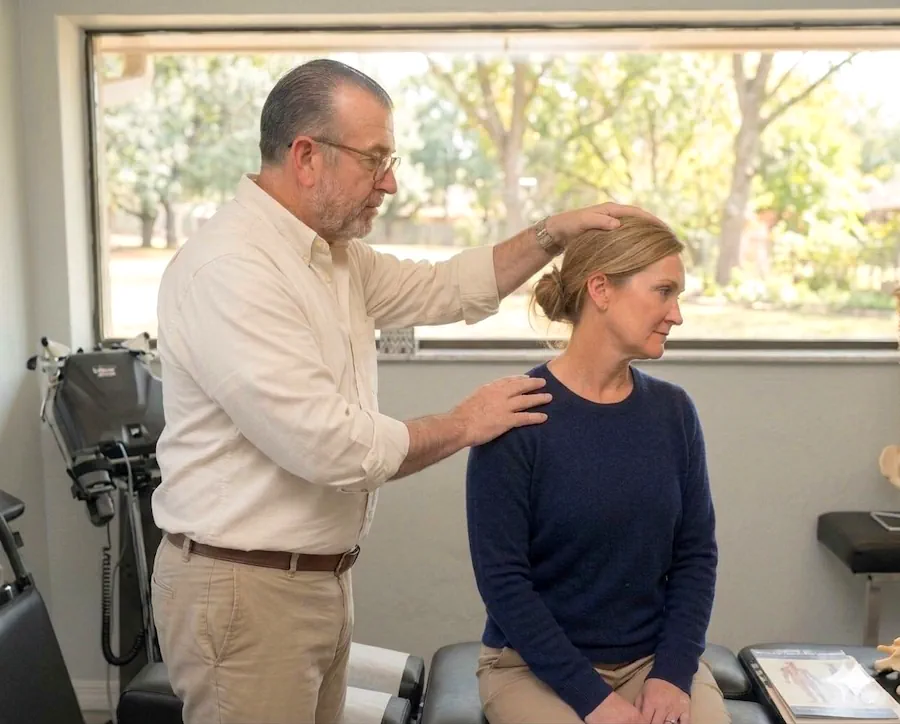
Doctor evaluating a patient's neck and spine after a car accident at OKC Pain Relief in Edmond, Oklahoma

The Injuries Most Clinics Skip: Bracing for Impact

In the moment before a crash, most drivers lock their arms on the wheel and jam a straight leg into the brake. That braced limb turns rigid, and the force drives straight into the shoulder, wrist, knee, hip, and ankle. These injuries get written off as bruising while every eye is on the spine, then they scar tight over the following weeks. They are treatable on the same medical approach used for the neck and back.

Joint Injuries After a Crash
📋

Cervical Strain and Disc Injury

The neck takes the worst of a rear-end collision. The result ranges from muscle and ligament strain to disc herniation pressing on a nerve root. Pain into the shoulder, arm, or hand points to nerve involvement and gets evaluated on its own. See neck pain for the cervical detail.

📋

Lumbar and Disc Trauma

Bracing against the floorboard and the seatbelt load can stress lower back discs. A crash can also light up a disc problem that was quiet before. When a disc is compressing a nerve, the case is treated as a herniated disc, not just back soreness.

📋

Soft Tissue Damage

Torn and overstretched muscle, tendon, and ligament drive much of the lasting pain after a crash. This tissue scars down when it is left to heal on its own, which is why early treatment changes the outcome.

📋

Nerve Irritation and Radiating Pain

When inflammation or a disc presses on a nerve, the pain travels. Numbness, tingling, burning, or weakness away from the crash site is a nerve signal and shapes the treatment plan.
How We Treat It

Our Approach to Accident Recovery

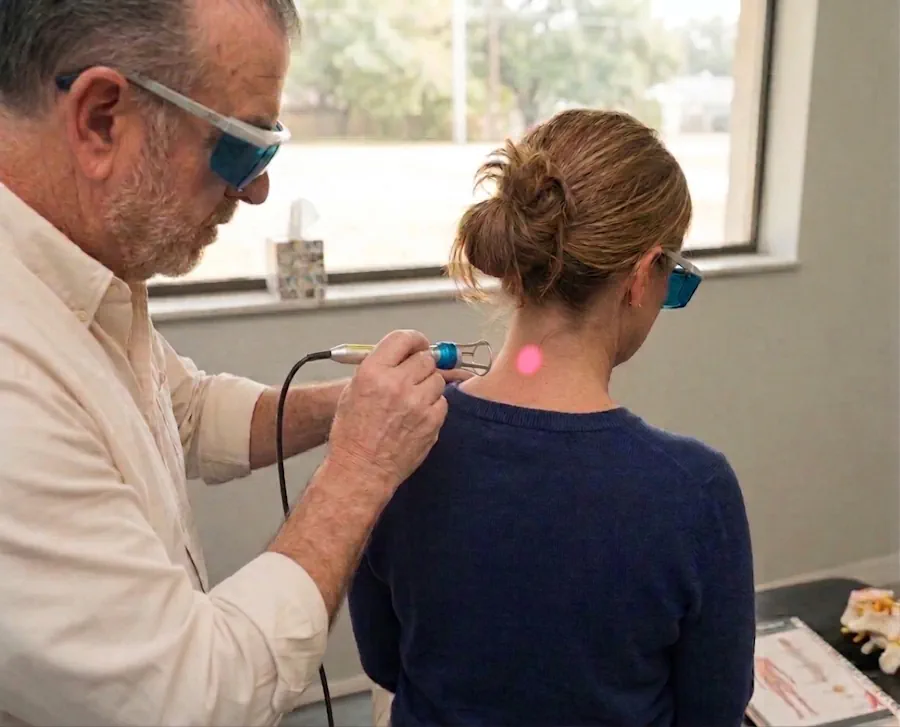
Class IV laser therapy applied to a car accident patient at OKC Pain Relief in Edmond, Oklahoma

Most accident cases use both. The laser settles the tissue and nerve. Decompression handles the disc when one is involved. Your evaluation decides what your plan needs and when each piece starts.

📋

Class IV Laser Therapy

This is the first tool in most accident cases. It works on the inflammation, soft tissue damage, and nerve irritation that drive post-collision pain, and it can start earlier in recovery than decompression. The wavelengths reach deep paraspinal muscle and irritated nerve tissue and push the stalled repair process forward instead of letting it scar. Individual results vary by injury and how soon care begins.

Learn More
📋

Spinal Decompression Therapy

When imaging shows a disc compressing a nerve, decompression treats the mechanical cause. It pulls negative pressure at the involved disc level so the disc can ease off the nerve root. This is usually brought in once the acute phase settles, often two to four weeks out, and is calibrated to the specific level on your imaging. Individual results vary.

Learn More
Getting Started

After an Accident, What the First Visit Covers

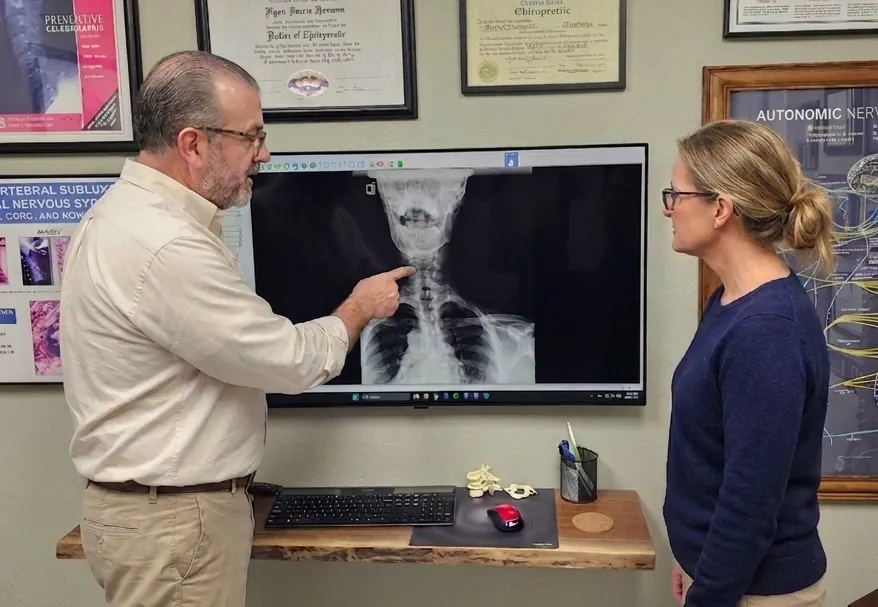
Doctor reviewing crash injury imaging with a patient at OKC Pain Relief in Edmond, Oklahoma

The first visit is an evaluation, not a treatment sell. A doctor takes your account of the crash and your symptoms, examines the areas involved, and reviews any imaging you bring. If you have not had imaging and the exam suggests a disc or nerve problem, we tell you what is needed before treatment starts.

If you are a candidate for laser therapy, decompression, or both, the doctor explains the plan, the expected number of sessions, and the schedule. If you are not a candidate, or if your injury needs a different kind of care, we say so and point you in the right direction. New patients can see what the visit looks like step by step on the new patients page.

You do not need a referral. If cost or coverage is a concern, the insurance and financing page explains how we verify benefits before you commit to a course of care.

Common Questions

After a Car Accident, What People Usually Ask

Sooner is better, even if you feel alright. Soft tissue and disc injuries from a crash heal cleaner when treatment starts before the tissue scars, and the first one to two weeks are the part of recovery you do not get back. Getting evaluated early also creates a dated clinical record from the start, rather than a gap that has to be explained later.

That is the common pattern, not the exception. The body floods with adrenaline during and right after a collision, which masks the signal. As that drops off over the next 24 to 72 hours, the real injury announces itself. Pain that shows up two or three days later is the soft tissue and inflammation catching up, not a new problem.

The emergency room rules out the things that kill you, such as fractures, bleeds, and organ damage. That work matters and it is a different job from this one. A clean trauma workup does not mean the disc, nerve root, and deep muscle came through clean. Those injuries do not show on a standard ER scan and are exactly what this clinic evaluates.

Yes. Vehicle damage and body damage do not track together. A bumper can absorb a low-speed hit while the force still loads your neck and a braced arm or leg. A fender bender that left the car looking fine can still produce a cervical strain or a wrenched shoulder. The injury is decided by what moved inside the car, not by the repair estimate.

Pain easing is not the same as tissue healing. Crash injuries often quiet down with rest, then return when normal activity resumes, because the underlying strain or disc problem scarred rather than repaired. An evaluation tells you whether what you have is settling on its own or setting up to become a long-term problem. Individual results vary.

Yes. We treat auto accident patients and provide itemized clinical records of the care we deliver, with dated documentation of your symptoms and treatment. We do not give legal advice and recommend speaking with your own attorney about any claim. Our role is the medical care and an accurate record of it.

Related Conditions
Next Step

The Sooner You Start, the Better It Goes

Accident injuries respond best when treatment starts early, before the tissue scars and the pain settles in. A free consultation lets us assess what the crash did and build a plan for your stage of recovery.

Individual results vary. Treatment is recommended only after clinical evaluation. This page is informational and is not medical or legal advice.